








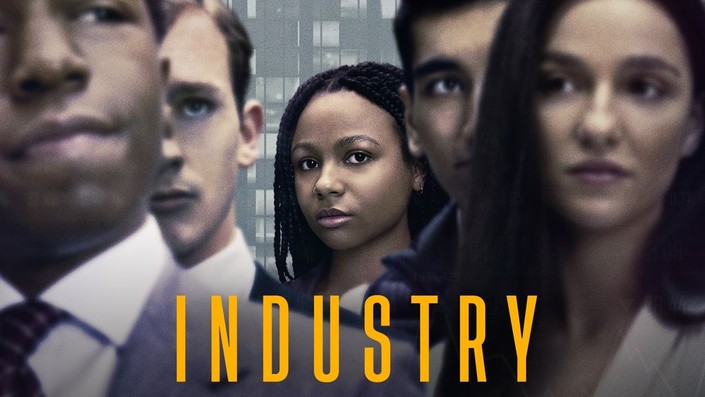

Industry is that rare beast – a modern show about finance that doesn’t sugarcoat the rot within. A joint British-American production, it debuted in 2020 and is set in the icy, backstabbing world of London investment banking. But don’t be fooled – this isn’t Suits. This is sex, drugs, betrayal, mental breakdowns, and the grim grind of a career that devours your soul and leaves your ambition barely alive. The story follows a group of hungry graduates fighting tooth and claw for a full-time spot at Pierpoint & Co., a prestigious investment bank that demands blood in return for a place at the table. Think The Hunger Games, but with spreadsheets, coke in bathroom stalls, and high-stakes trading.
At first glance, the main cast — Harper, Yasmin, Robert, and Gus — appear to be just another set of bright-eyed hopefuls trying to make it big. But as each episode peels away the layers, we realize they’re just as twisted, dysfunctional, and power-hungry as the system they’ve entered. Everyone’s broken, just hiding it in better clothes. Let’s get this straight: Industry doesn’t care about heroes. There are none. What it offers is a brutal, often exhilarating look at people pushed past their breaking point — and still clawing for more.

Characters: Broken, Brilliant, and Brutally Ambitious
Harper Stern, the apparent protagonist, is a walking paradox — confident but insecure, competent yet reckless. She’s smart, yes, but she’s also faked her college credentials, which is just the beginning of her moral compromises. She’s taken under the wing of Eric Tao, Pierpoint’s dragon of a Managing Director, who sees her as a mini version of himself — ruthless, raw, and unpolished.

Yasmin Kara-Hanani is the privileged polyglot who begins the series on the FX desk but ends up in a far darker place. She’s alluring, manipulative, and brilliant — and as the show progresses, she becomes more unhinged and unpredictable. There are times you pity her, and others when you want to see her fall.
Robert Spearing, the working-class Oxford grad, is the most emotionally accessible of the crew. He masks his imposter syndrome with arrogance and sex appeal, but cracks start to show early. His vulnerability makes him endearing, but the environment he’s in doesn’t reward emotional intelligence. It punishes it.

Gus Sackey, Eton-educated and Oxford-bred, has the most moral compass of the lot — which, of course, means he doesn’t last long. Pierpoint isn’t built for idealists. Gus exits finance for politics, a move that ironically might be the least morally bankrupt decision made by anyone on the show.
Then there’s Eric Tao, a hardened Wall Street veteran and a symbol of toxic leadership masquerading as mentorship. Initially seen as a power player with a code, Eric’s control begins to unravel as the seasons go on — a metaphor, perhaps, for the old guard struggling to stay relevant in a world that eats its own.

And we can’t ignore Rishi Ramdani, the underdog who steals the spotlight. Initially lurking in the background, Rishi’s complexity shines in later seasons — particularly in Season 3, where an entire episode revolves around him. His dry wit, existential musings, and complete disregard for bullshit make him, frankly, the most watchable person on screen.
What Makes Industry So Damn Good
Let’s talk tone. Industry is raw, sharp, and always pushing. The sex is explicit, the power games unrelenting, and the dialogue… razor-edged. There’s no space for fake morality here. The characters lie, cheat, seduce, and betray not out of evil but necessity. Success at Pierpoint isn’t about being good — it’s about survival.
And unlike most shows that write women as either damsels or dominators, Industry nails female complexity. Yasmin and Harper aren’t heroines, they’re predators in power suits — flawed, smart, seductive, and as corrupted as the men they compete with. And yet, they’re never reduced to tropes.

There’s also an undercurrent of race, class, and sexuality — not shoved in your face but simmering underneath. The elitism of British finance meets the hustle of international outsiders. The result? A workplace where talent means nothing if it doesn’t come with the right accent, lineage, or network.
The show doesn’t shy away from mental health either. It throws you into the deep end from Episode 1 — with Hari, a character who quite literally burns out from the pressure. There’s no sentimental montage or teary redemption arc. Just the harsh truth: this job kills people.

Why It’s Not for Everyone — But Maybe It Should Be
Industry doesn’t explain itself. It expects you to keep up. The trading jargon is thrown around with zero handholding. You’ll either drown or pay attention. It’s also not interested in moral lessons. Don’t expect redemption. Expect reality — stylized, brutal, and disturbingly relatable.
At its core, Industry is a mirror to modern ambition — especially among the elite. It shows the consequences of chasing power in a world where loyalty is transactional, relationships are leveraged, and every success comes at someone else’s expense.

JAY’S VERDICT
If you’re still watching reheated boardroom dramas that pretend to critique capitalism while secretly worshipping it (looking at you, Billions), Industry is the antidote. It’s slick, addictive, and scarily close to reality. Watch it — then ask yourself why you’re still rooting for these monsters. Maybe because, deep down, you see a bit of yourself in them.


