







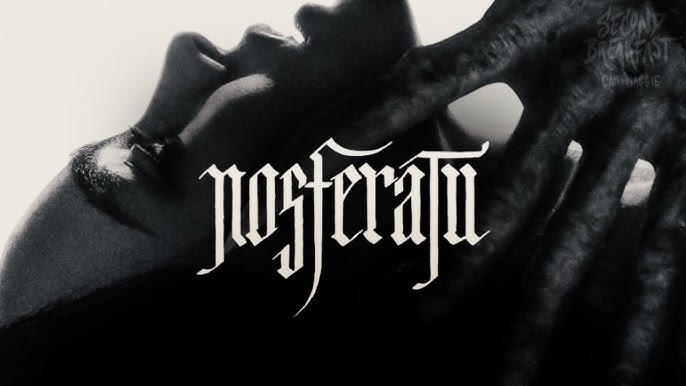

There’s something timeless about dread. Not the jump-scare kind, but that slow-burning, oppressive fear that seeps into your bones and makes you squirm in your seat. Nosferatu (2024), directed by Robert Eggers — the same mind behind The Witch, The Lighthouse, and The Northman — is exactly that kind of experience. With this chilling retelling of the Dracula legend, Eggers delivers a masterclass in Gothic horror, a film that doesn’t merely entertain — it infects you.
A remake of the 1922 German silent classic, itself an unofficial adaptation of Bram Stoker’s Dracula, Eggers’ Nosferatu isn’t just an homage. It’s a resurrection. The tale is familiar — an unholy vampire’s thirst for a woman’s soul and blood — but Eggers breathes new life into the bones of this ancient legend with his trademark eerie atmosphere, meticulous world-building, and creeping madness. And while the supporting cast does their part, the film rests heavily — and triumphantly — on the shoulders of two terrifyingly good performances: Bill Skarsgård as the monstrous Count Orlok, and Lily-Rose Depp as the tormented Ellen.
Skarsgård, fresh off terrifying audiences as Pennywise in It, completely disappears into Count Orlok. His transformation is staggering — grotesque, twitchy, whispering horror with every step. His presence on screen is magnetic and dreadful in equal measure. From the moment he appears, you feel unclean. And Depp, to her credit, doesn’t get swallowed by his monstrous performance. She meets it with quiet intensity and emotional depth, turning what could’ve been a passive victim into a doomed heroine with genuine agency.
The film opens in the early 1830s with Ellen, isolated and spiritually frayed, calling out for something — anything — to release her from her aching loneliness. That cry awakens something ancient, buried, and very hungry. When she later marries Thomas Hutter (Nicholas Hoult), their peaceful life in the German town of Wisburg is short-lived. Thomas, lured by profit, is sent to Transylvania to sell a crumbling estate to a mysterious Count — Orlok — despite Ellen’s ominous premonitions.

From the moment Thomas sets out, things unravel. He’s shunned by villagers, witnesses the brutal exhumation of a suspected vampire, and ends up at Orlok’s crumbling castle — a hellscape out of nightmares. Orlok is a spider of a man, physically revolting and emotionally hollow. He ensnares Thomas with occult contracts, invades his mind, and drains him of blood while stealing the locket that contains Ellen’s hair. The real horror begins not with fangs but with signatures — dark deals disguised as business.
Orlok’s voyage to Wisburg mirrors the plague. He brings rats, death, and dread with him. Thomas returns home, barely surviving, while the Count sets up shop across town at Grünewald Manor. The city begins to fall into chaos — people rot, families burn, children die. The spread of Orlok’s evil is less spectacle and more psychological rot. Eggers doesn’t rush the horror. He lets it breathe, decay, and infect.

And then there’s the triangle: Ellen, Thomas, and Orlok. It’s not romance — it’s obsession, damnation, and sacrifice. Orlok is bound to Ellen not by love, but by possession. A supernatural contract has tied their fates, and unless she willingly submits, everyone she loves — including Thomas — will die. The final act is operatic, tragic, and terrifying. Ellen, realizing the weight of her choice, seduces Orlok into draining her life as the sun rises, immolating him in a poetic blaze while she dies in Thomas’s arms.
The supporting cast holds their own — Nicholas Hoult is effective as the naïve and increasingly helpless Thomas, and Willem Dafoe (as the occult-obsessed Von Franz) reminds us once again why he’s the king of weird horror. Von Franz, a character that might’ve felt like a cliché in another director’s hands, becomes a compelling prophet of doom here. The subplot with Knock — the deranged servant of Orlok who devours sheep and rants about destiny — is grotesque and disturbing in all the right ways, a nice nod to Renfield from the original Dracula mythos.

Eggers also weaponizes sound design like a maestro of madness. There’s no booming horror score or cheap tricks — instead, Nosferatu’s world is full of eerie whispers, scratching rats, drips of blood, and the groans of dying men. It’s unnerving because it feels real. The camera lingers too long, the shadows are too thick, and the silence too loud. The dread is never loud — it’s crawling, quiet, and suffocating.
Yes, this isn’t a movie for everyone. There are no vampire romances, no fight scenes, no sexy immortals with six-pack abs. This is horror done old school — dirty, unsettling, and psychological. If you came for Twilight, turn back. If you came for something that lingers long after the credits roll, you’re in the right place.

Thematically, Nosferatu is about more than just vampirism. It’s about power, loneliness, grief, and the existential cost of salvation. Ellen isn’t just a victim — she becomes the Christ-figure, sacrificing herself to destroy the plague and the evil that shadows her world. And that, more than the blood or the bites, is what gives this film its weight.
In the end, Nosferatu (2024) is one of the best horror films of the decade so far. It’s a dread-soaked slow burn with atmosphere you can feel under your skin. Robert Eggers continues to prove why he’s one of the most important horror auteurs working today — not because he reinvents the genre, but because he remembers what made it terrifying in the first place.
JAY’S VERDICT
Nosferatu is everything modern horror forgets to be — elegant, slow, atmospheric, and genuinely unsettling. With Lily-Rose Depp and Bill Skarsgård giving two of the most memorable performances in recent horror, and Eggers fully in his creepy element, this film is a must-watch. Go see it — preferably in a dark, empty theatre. You won’t sleep well afterward.


